

|
 
|
Welcome! |
 Tuesday, September 22
 |
| WHAT'S HOT |
|
|
| SITE OPTIONS |
 Site Intro Guest Book📝 Contact Us📞 Mailing List📩 Site Intro Guest Book📝 Contact Us📞 Mailing List📩 |
| QUICK LINKS |
Testimonials School Location📌 Class Schedule🕖 Tien Shan Pai Curriculum Wing Chun Curriculum Tai Chi Chuan Curriculum Seminars🎓 Events📅 News📣 Articles✒️ Photo Gallery🖼️ Chinese Terminology FAQ School Location📌 Class Schedule🕖 Tien Shan Pai Curriculum Wing Chun Curriculum Tai Chi Chuan Curriculum Seminars🎓 Events📅 News📣 Articles✒️ Photo Gallery🖼️ Chinese Terminology FAQ |
| SCHOOL SEARCH |


|
| Home -> Classes -> Wing Chun -> History | |||


|
|||
Wing Chun History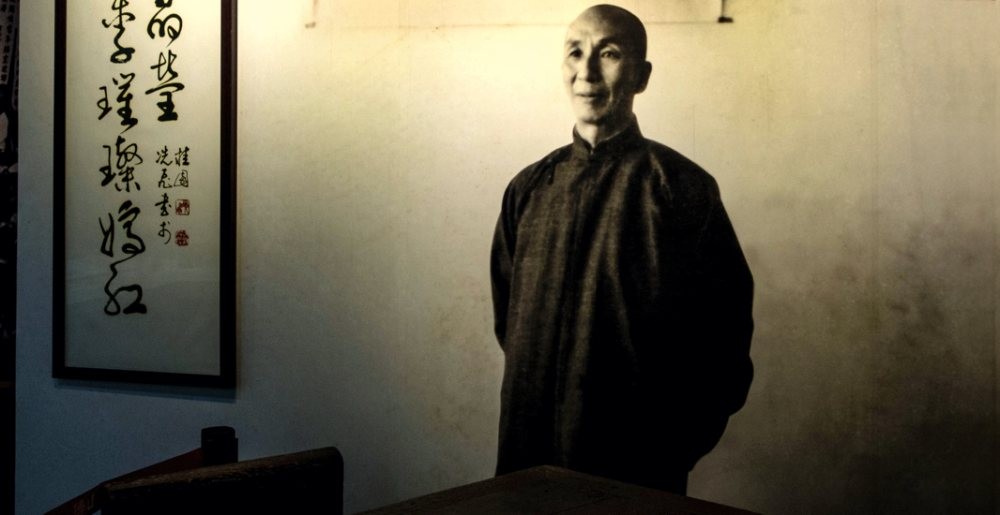
Origins and LegendsWing Chun (咏春 wing6 ceon1 in Cantonese) or Yong Chun (咏春 yǒng chūn in Mandarin), aka "singing spring", is a Southern Chinese martial art renowned for its close-quarters combat, centerline theory, and simultaneous attack-and-defense principles. Its exact origins are debated, with multiple lineages preserving different stories. Considered to be one of the three great martial art styles of Southern China, it was founded during the Qing Dynasty by a Buddhist nun, Ng Mui, of the famed Shaolin Temple. Ng Mui, one of the top five fighters of the day, aimed at designing a more effective fighting method which did not rely on brute strength to be effective. The many origin stories highlight Wing Chun's dual identity: both a legendary tale of resilience and a practical system born of necessity. Legend of Yim Wing ChunAccording to Grandmaster Ip Man's handwritten account, the art was named after a young woman, Yim Wing Chun, who learned martial skills from the Shaolin nun Ng Mui. She used this system to defend herself against a warlord's unwanted advances, later passing it to her husband Leung Bok Chau. Shaolin Temple ConnectionOther traditions trace Wing Chun's roots to the Shaolin Temple's revolutionary monks, who refined a system that could be mastered quickly—within 3–4 years instead of decades. That way rebels could resist the oppressive Qing Dynasty. Historical DevelopmentSouthern China (17th–18th Century)Wing Chun emerged during the late Ming and early Qing dynasties, shaped by political upheaval and the destruction of Shaolin temples. Transmission Through Families and Secret SocietiesFor generations, Wing Chun was taught discreetly, often within families or revolutionary circles. Ip Man Era (20th Century)The most influential figure in Wing Chun's modern history is Ip Man (1893–1972). Teaching in Hong Kong from 1949 onward, he standardized the art and trained thousands of students. His most famous disciple, Bruce Lee, later integrated Wing Chun principles into Jeet Kune Do, spreading its influence worldwide. Global ExpansionIn 1967, Ip Man and his students founded the Ving Tsun Athletic Association, ensuring Wing Chun's preservation and international growth. Philosophy and PracticeWing Chun is not only a martial art but also a philosophy of efficiency, adaptability, and balance. It emphasizes several principals:
Cultural ImpactCinema and MediaWing Chun gained global fame through the Ip Man film series starring Donnie Yen, as well as Bruce Lee's legacy. Modern PracticeToday, Wing Chun is taught worldwide, blending traditional lineage with modern training methods. Influence on Other ArtsIts principles shaped Jeet Kune Do and inspired adaptations in self-defense systems across the globe. Why So Many Spellings?You will have noticed that there are many different ways of spelling the same art. These include: Wing Chun, Wing Tsun, Ving Tsun, Wing Tyun, Weng Chun and Yong Chun. Although these terminologies all refer to the same style of Kung Fu, the spelling and pronunciation can often cause confusion. Some differences in spelling are because of the way the various Chinese languages and dialects are translated (or "romanized") into English and other European languages. For instance the letter "W" is pronounced as "V" in German, and vice-versa. The actual sound of the Chinese character lies somewhere between the two, and so this situation often leads to the Wing / Ving difference. A similar problem exists with the "T" and "C" sounds of Chun / Tsun. Chi Sau (黐手 ci1 sau2) aka "Sticky Hands"Chi Sau is a series of exercises used to develop a keen tactile awareness, or 'sensitivity' to the direction and amount of pressure applied to the limbs. When in close-contact with an opponent, things may happen too quickly to be able to rely solely on visual reactions. Tactile reactions are far quicker, and turn the three-step process of see-think-move into the two-step process of feel-move. The actual quality and depth of Chi Sau training will vary depending on the approach. Some Wing Chun methods have very systematic, detailed Chi Sau covering all limbs, whilst others prefer just a few short, traditional drills. Practical ApplicationsThis is when the combat reactions developed within Chi Sau and other drills are applied in sparring exercises with a live opponent. Applied Chi Sau is what Wing Chun is all about. You have to be able to apply your skills in a real situations. Wooden Dummy (木人樁 muk6 jan4 zong1);Training on the wooden man or Mook Yan Chong is common to all branches of the style, although huge differences exist concerning when, how and even why such training is done. The Wooden Dummy is a very versatile training aid unique to Wing Chun Kung-Fu, and is used in many ways. Some consider it the ultimate strong opponent, forcing you to adapt yourself to immovable positions. Some use the "rebound" force the dummy generates when struck as an impulse for further movement, and some use it as a way of conditioning their limbs to be resilient to impacts. The Wooden Dummy can be profitably used at ALL stages of Wing Chun training under the guidance of an instructor. However, it is usually only at the advanced stages of the art where regular, constant training takes place using this specialised piece of equipment.
|


 YouTube YouTube
 Facebook Facebook
|
